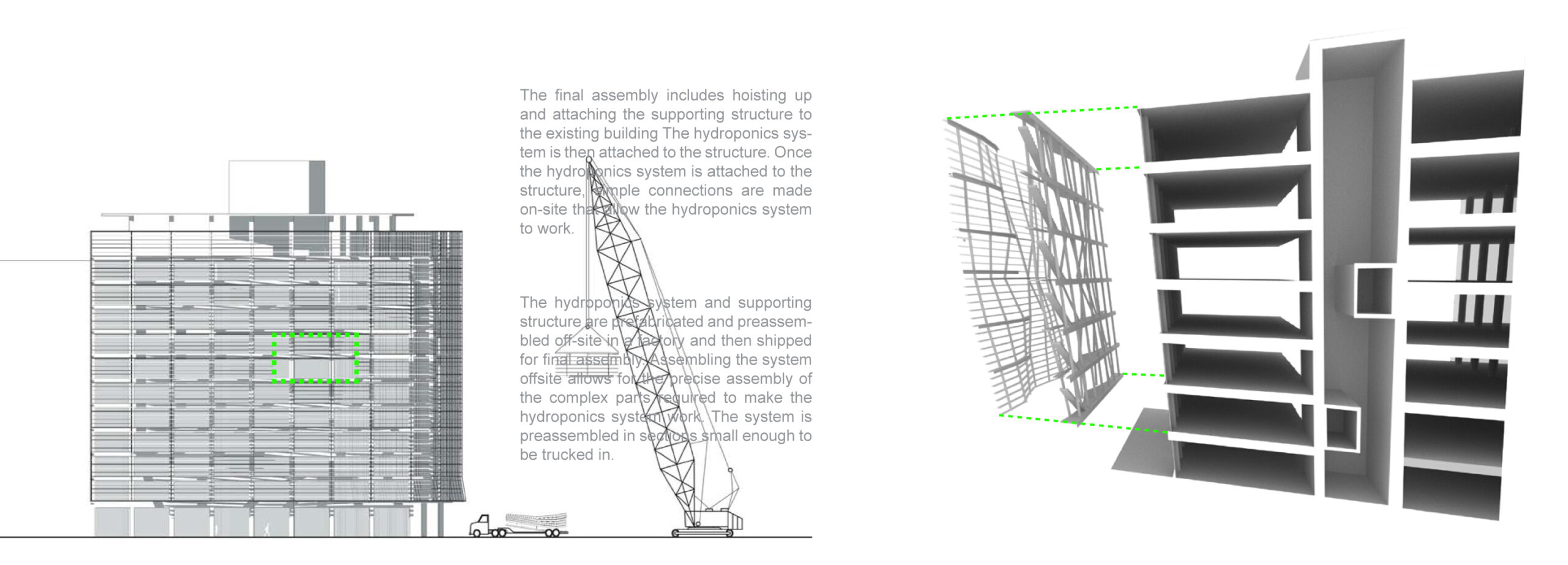
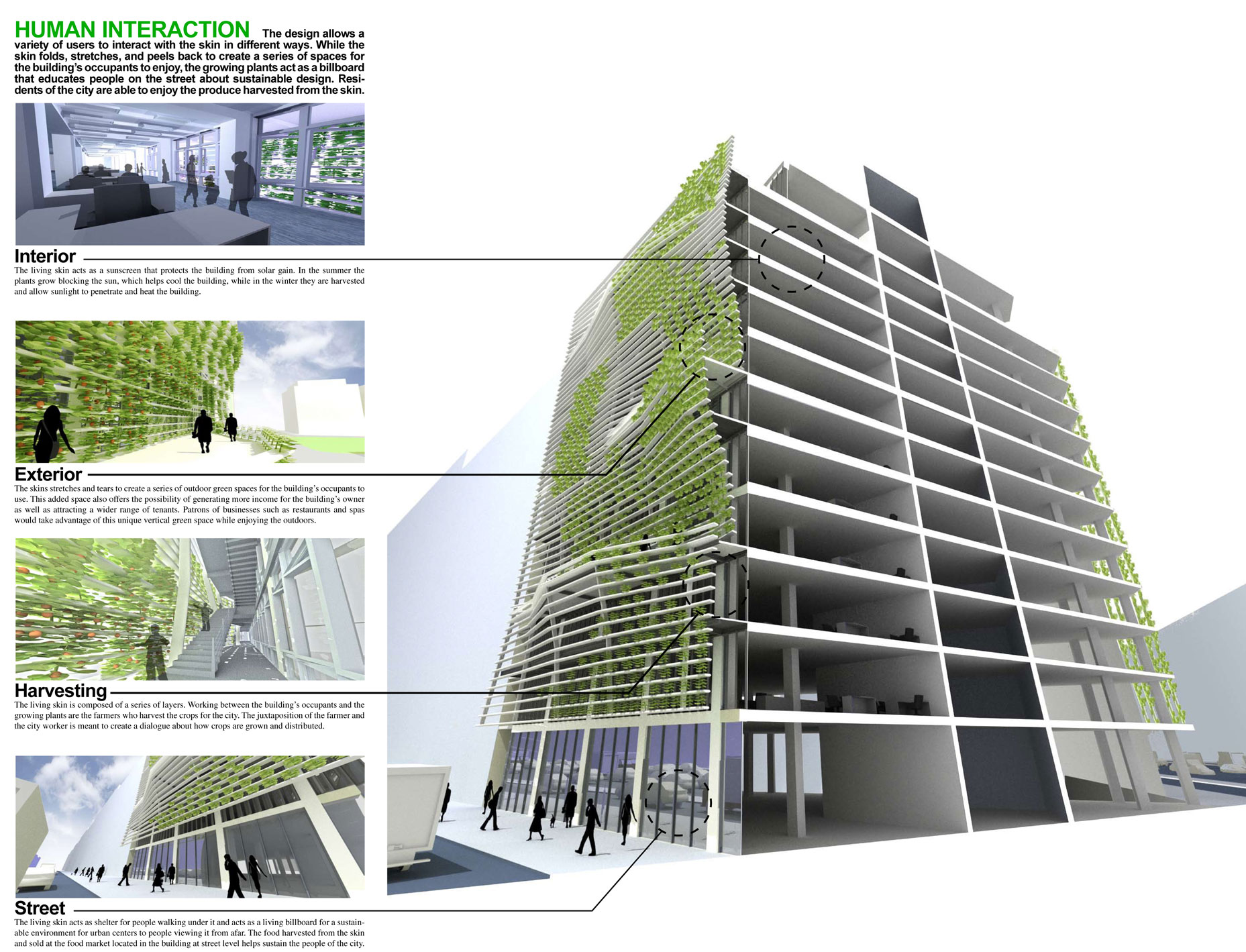
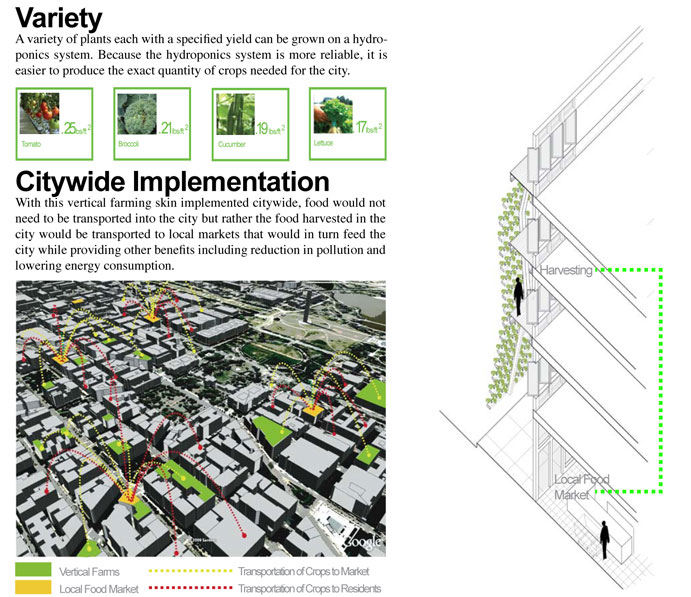
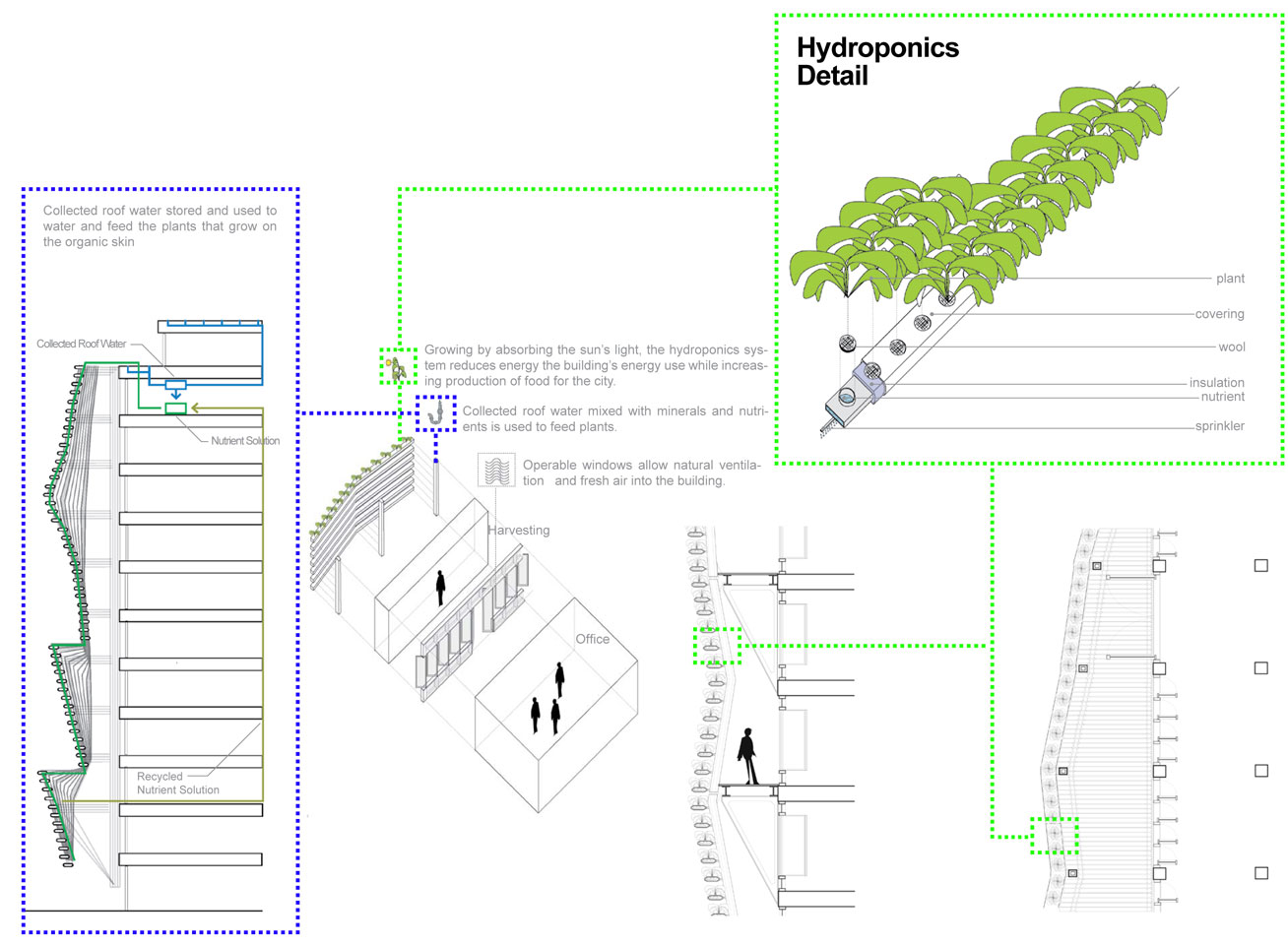
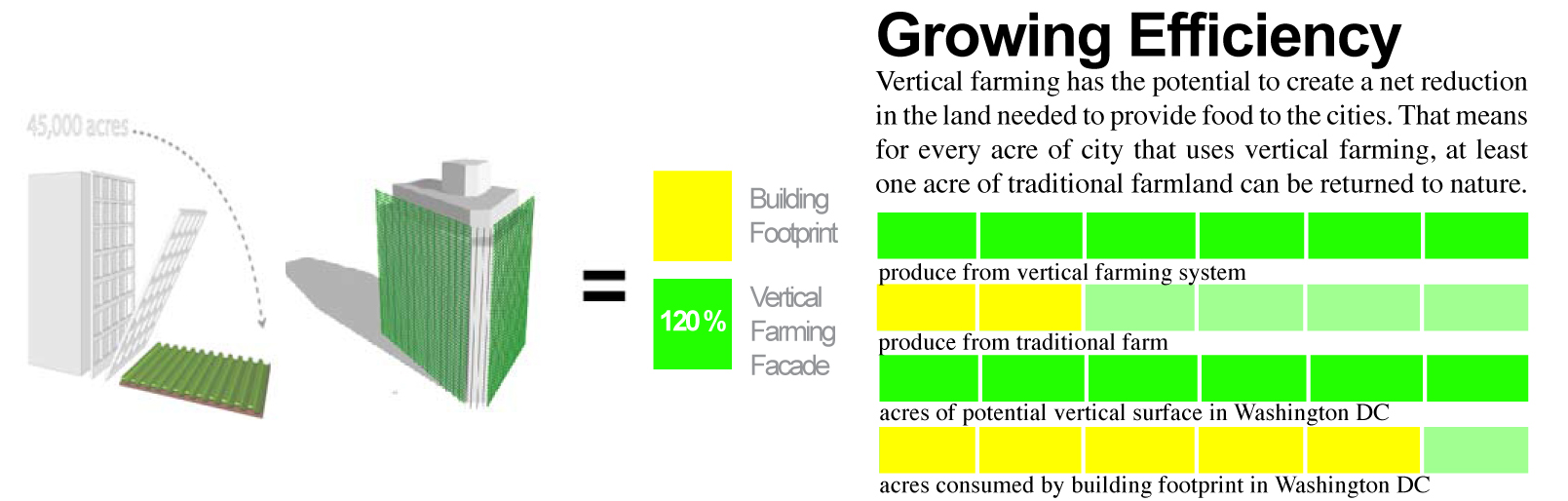
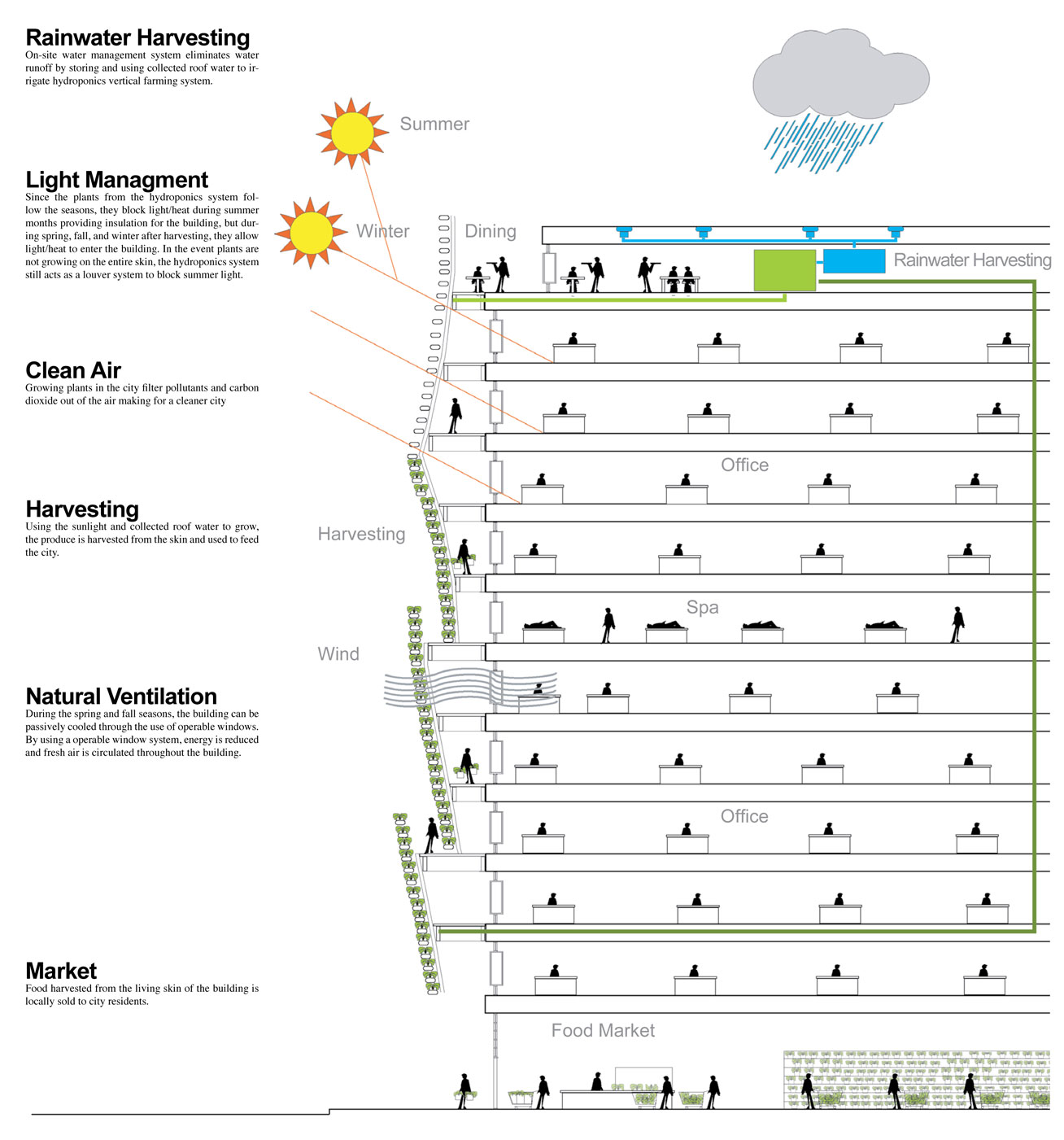
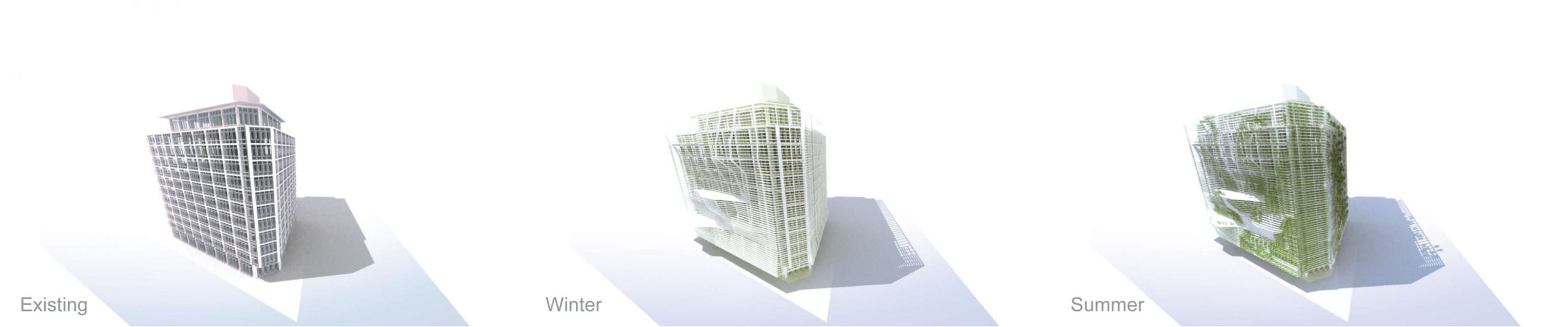
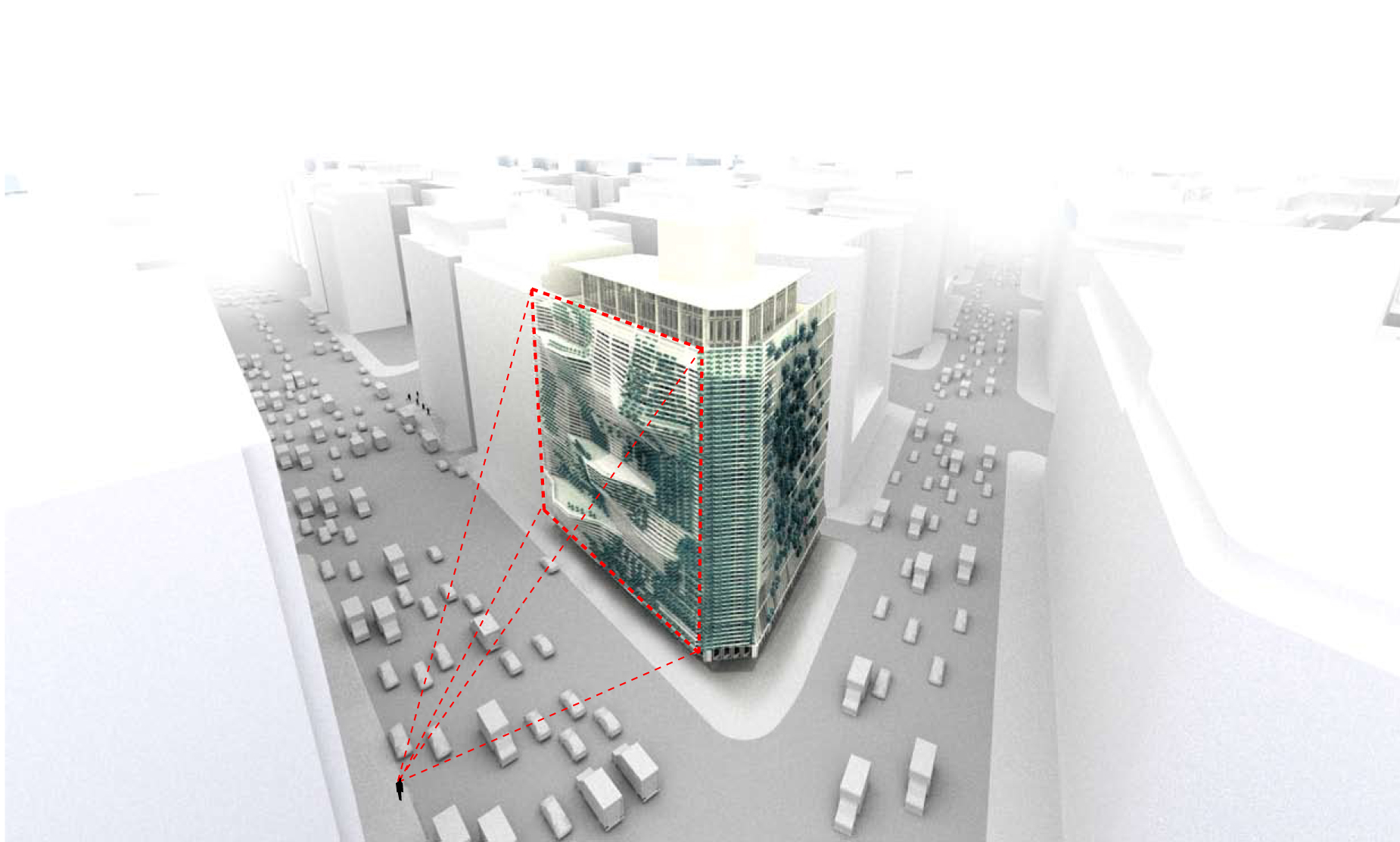
Developed as part of the Emerging Green Builders Natural Talent Competition, this project explored the intersection of architecture, sustainability, and urban agriculture through the lens of façade design. The central question was both simple and urgent: how can building skins be reimagined to offset carbon footprints, not only by conserving energy but by actively producing resources?By focusing on food production as a means of environmental impact reduction, the design investigated the possibilities of farming vertically and locally. What if produce could be grown in significantly less space? What if the distance between food and consumer could be minimized? With over 83 percent of the U.S. population residing in urban areas, the project proposed a system that integrates food cultivation directly into the built environment.The outcome was a modular hydroponic façade system designed to attach to both new and existing urban buildings. This living skin serves a dual purpose: functioning as a reliable source of locally grown food and acting as a passive energy system. During warmer months, the vegetated façade provides shade and insulation, reducing solar gain. In winter, after seasonal harvesting, the sun’s rays are allowed to warm the building, increasing energy efficiency.The system is conceived as a reciprocal organism—an adaptive interface between architecture and environment that evolves with the seasons to serve both building performance and urban sustainability. In doing so, the façade becomes not only a technological solution but a living strategy for resilience in future cities.